Why Does My Tooth Hurt?
Tooth pain almost always has a findable cause: decay reaching the nerve, a crack, an infection, gum recession, or grinding.
Get the answerStart with the feeling
Dental worry usually starts with a feeling, not a treatment name. Pick the question closest to yours and get a straight answer: what it might be, how urgent it is, and what fixing it involves. (No dental dictionary required.)
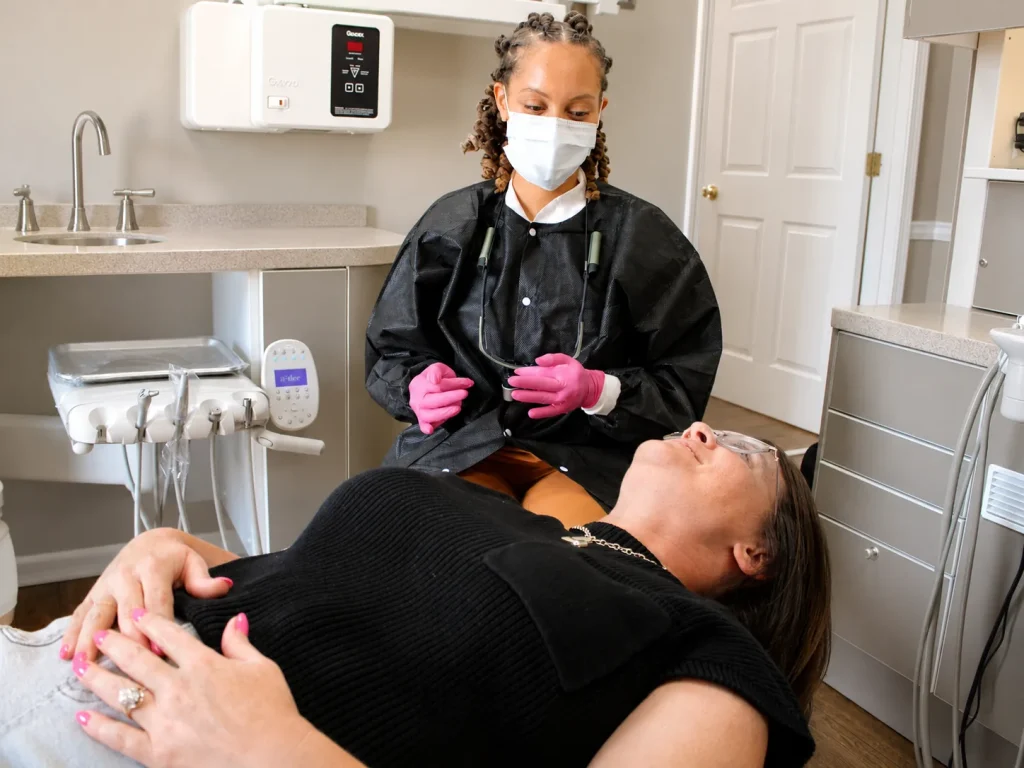
Tooth pain almost always has a findable cause: decay reaching the nerve, a crack, an infection, gum recession, or grinding.
Get the answerA dental emergency is anything that threatens a tooth or your health if it waits: a knocked-out or broken tooth, swelling, uncontrolled bleeding, or severe worsening pain.
Get the answerCracks don't heal, and chewing on one makes it grow. If you felt something crack, or biting sends a sharp jolt, stop chewing on that side, rinse gently, and call.
Get the answerSensitivity happens when the protective layers of a tooth get thin or the gums pull back, exposing the softer layer underneath.
Get the answerHealthy gums don't bleed from normal brushing and flossing. Bleeding almost always means inflammation from plaque along the gumline, the earliest stage of gum disease.
Get the answerPersistent bad breath usually starts in the mouth, not the stomach: bacteria on the tongue, plaque under the gumline, dry mouth, or decay.
Get the answerThere are three proven ways to replace missing teeth: an implant-supported tooth, a fixed bridge, or a removable denture.
Get the answerTeeth grinding, called bruxism, is usually driven by stress, sleep patterns, bite misalignment, or some medications, and most of it happens while you sleep.
Get the answerMost jaw pain traces back to the joint and the muscles that move it: clenching and grinding overwork them, stress keeps them tight, and bite problems make them compensate.
Get the answerDental anxiety is common, real, and workable. The path isn't bravery; it's control.
Get the answerAlmost certainly, and often with less dentistry than you'd expect. Stains respond to whitening, chips and small gaps to bonding, alignment to clear aligners, and bigger transformations to veneers.
Get the answerFor most adults with crowding, gaps, or mildly rotated teeth, clear aligners are the practical answer: a series of nearly invisible trays that move teeth a little at a time.
Get the answerCall the office and tell us what's going on. You'll get a straight answer either way.
Schedule a visit
Choose how you would like to reach us.
Request an appointment online, call during office hours, or send a general question. For urgent dental pain or swelling, please call.